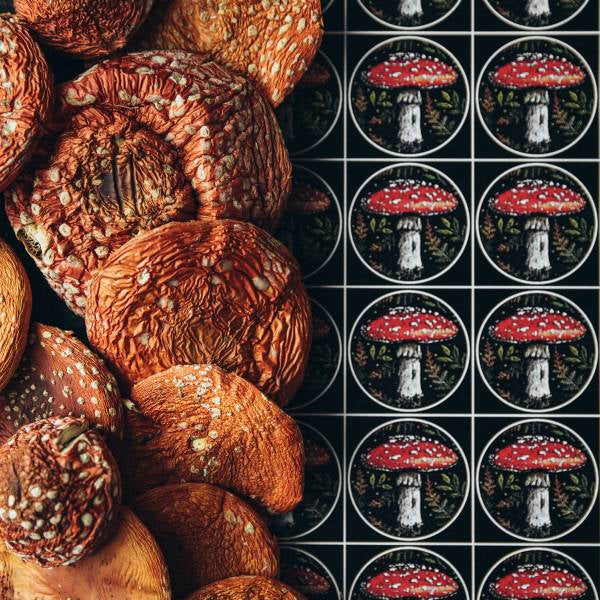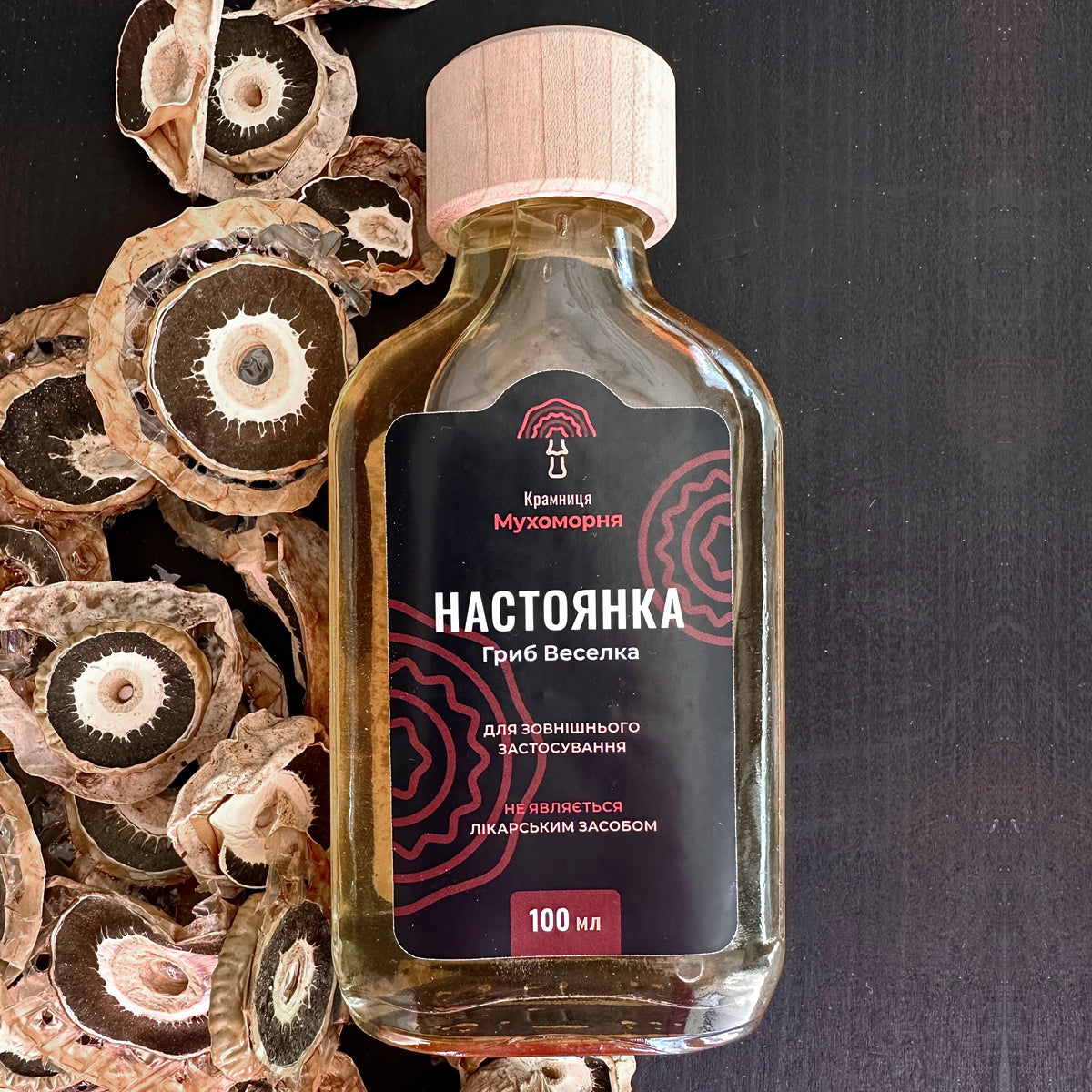

Instructions for the use of fly agaric
Red fly agaric (Amanita muscaria) is increasingly used for microdosing. At the same time, it is a poisonous mushroom, so it calls for informed and careful use. This guide explains which forms it's sold in, what it contains, who should not use it, and what to watch out for.

What Amanita Muscaria Contains
The main active compounds are ibotenic acid and muscimol. During drying, some of the ibotenic acid converts into muscimol, but it doesn't disappear completely. The mushroom also contains small amounts of muscarine, and its red cap color comes from the pigment muscarufin.
The concentration of these compounds varies noticeably between individual mushrooms. It depends on where and when they were harvested, the age of the mushroom, and the drying method. That's why the same weight of product doesn't guarantee the same effect.
Available Forms
- Whole caps. The least processed form. Caps need to be weighed accurately before use, so you'll need jewelry scales.
- Powder. Ground caps that are easy to add to water or drinks. Powder also needs to be weighed.
- Capsules. The most convenient form: each capsule holds a fixed amount of powder, so there's no weighing and no mushroom taste.
For how to make tea, an infusion, or powder from dried caps, see our article How to use dried fly agaric.
Recommendations for Amanita Muscaria Microdosing
Microdosing typically starts with 0.2 g of red fly agaric (Amanita muscaria). If you do not notice any effect within a week, the amount can be gradually increased. For example, you may take 0.2 g in the morning and 0.2 g in the evening. Then observe how you feel again.
It is important to understand that the effects of Amanita muscaria are dose-dependent and may vary from person to person. You can also experiment with the timing of intake, for example, taking two capsules in the morning or one capsule in the morning and another in the evening.
After taking the capsules, it is recommended to drink a glass of water or tea.
Dosage: 0.2–2 g per day. The amount can be gradually increased up to 2 g. Start with 1 capsule in the morning and/or evening, and later increase to 2 capsules in the morning and/or evening.
How to Use It Carefully
- Follow the information on the package and don't exceed the amount stated there.
- Start with the smallest amount and pay close attention to how you feel.
- Don't combine fly agaric with alcohol, sleeping pills, sedatives, antidepressants, or other drugs that affect the nervous system.
- Don't drive or operate machinery after use.
- Keep notes on how you feel so you can spot unwanted reactions early.
- Don't eat fly agaric as food. Cooking doesn't turn it into an ordinary edible mushroom.
Who Should Not Use Fly Agaric
- pregnant or breastfeeding women;
- anyone under 18;
- people with mental health or neurological conditions (including epilepsy), or with a family history of schizophrenia;
- people with heart, liver, or kidney disease;
- people recovering from surgery;
- anyone with an individual intolerance.
If you take medication regularly or have a chronic condition, talk to your doctor first.
Possible Side Effects
Reactions to fly agaric vary. Possible effects include nausea, vomiting, stomach discomfort, increased salivation or sweating, dizziness, severe drowsiness or agitation, impaired coordination, and confusion.
If you notice these symptoms, stop using the product. If you experience severe nausea, extreme drowsiness, or confusion, seek medical help immediately: call 911 in the US or 112 in the EU.
Storage
Store fly agaric in a dry, dark place at +5 to +15 °C in tightly sealed packaging. Muscimol gradually oxidizes in air, so opened caps and powder change their properties over time. Capsules are better protected. Keep out of reach of children.
Muhomornya Products
We harvest red fly agaric in the Carpathian forests, dry it at a controlled temperature, and offer whole caps, powder, and capsules. You can view our product certificates online. For other questions, see our FAQ or message us on Telegram.
This product is not a medicine.
Sources
- Ibotenic Acid and Muscimol in Amanita muscaria: Chemistry, Sources of Variability, Analytical Determination, and Toxicological Significance // Molecules, 2026. DOI: 10.3390/molecules31183232
- Acute Amanita muscaria Toxicity: A Literature Review and Two Case Reports in Elderly Spouses Following Home Preparation // Toxins, 2025. PMID: 41441606