FAQ
In this section, you’ll find answers to the most frequently asked questions about our products. Here you can learn more about their properties, how to use them, and the production process, as well as ordering, payment, and delivery terms.
Couldn’t find the information you were looking for? Contact us—we'll be happy to answer your questions and help you choose the right product. 😊
Most Popular
What is microdosing?
Microdosing is the practice of consuming dried fly agaric in very small amounts. Supporters of this approach associate it with a feeling of relaxation, reduced inner tension, and changes in overall well-being.
Microdosing red fly agaric involves using small amounts of the dried mushroom without the intention of causing pronounced intoxication or hallucinogenic effects. The amount and timing may vary depending on individual sensitivity. At the same time, red fly agaric contains biologically active and potentially toxic compounds, so its use requires particular caution.
What is the difference between mushroom powder, capsules, and whole mushroom caps?
Mushroom powder is made from dried mushrooms that have been finely ground. It can be conveniently added to water, tea, other drinks, or food. For accurate portioning, we recommend ordering a precision scale together with the product.
Capsules contain the same mushroom powder, but in a ready-to-use pre-portioned form. They are the most convenient option for daily use, travel, and accurate dosing without the need to weigh the product yourself.
Whole mushroom dried caps are dried parts of the mushroom in their most natural form. They can be ground at home, used for preparation, or consumed as they are. Accurate weighing is important when dividing them into individual portions.
Can fly agaric (Amanita Muscaria) be combined with other mushrooms?
Red fly agaric (Amanita Muscaria) is sometimes combined with Lion’s Mane, Chaga, and other functional mushrooms. However, using several active products at the same time may affect how the body responds, so such combinations should not automatically be considered more effective or safer.
Which countries do we ship to?
We ship worldwide, including EU countries, the USA, Canada, Australia, and many other destinations.
How can I pay for my order?
Available payment methods may vary depending on the destination country. Options include bank transfer to an IBAN account (SWIFT), PayPal, PaySend, Skrill, and Cryptocurrency (USDT-TRC20).
Lion’s Mane (Hericium erinaceus)
What is the difference between fermented and non-fermented mycelium?
When mycelium undergoes fermentation, microorganisms change its biochemical composition at the cellular level. The fungus itself naturally ferments the substrate on which it grows, but controlled fermentation goes further: it can increase the bioavailability and activity of certain bioactive compounds in the mycelium. At the same time, the taste, color, and aroma of the product may also change, often becoming more pleasant.
Thanks to the increased bioavailability of active compounds, fermented mycelium is often associated with processes related to NGF (nerve growth factor). Fermentation may enhance the availability of compounds that are being studied for their potential role in supporting brain and nervous system function.
Non-fermented mycelium is the raw, untreated vegetative part of the fungus. It retains its natural components but does not undergo the additional transformations created by fermentation. As a result, the bioavailability and concentration of certain active compounds may differ compared with fermented mycelium.
Which is better - the fruiting body or the mycelium of Lion’s Mane? What is the difference?
The fruiting body and mycelium of Lion’s Mane differ in their composition of biologically active compounds. The fruiting body contains hericenones, beta-glucans, polysaccharides, and antioxidant compounds. Hericenones are being studied for their potential influence on processes related to the nervous system and nerve growth factor (NGF).
Lion’s Mane mycelium is particularly interesting because of its erinacine content - compounds that are generally found in much higher concentrations in the mycelium than in the fruiting body. Erinacines are actively being studied for their neurotrophic properties and their potential influence on NGF synthesis. However, a significant portion of the available evidence comes from laboratory and animal studies.
Which one should you choose?
The fruiting body may be suitable for those looking for a natural mushroom product containing a broad range of compounds, including beta-glucans and polysaccharides.
The mycelium may be of particular interest because of its erinacine content. When choosing a mycelium-based product, it is important to pay attention to the cultivation method, composition, and the amount of residual grain substrate.
Both forms of Lion’s Mane have different compositions, so it is not entirely accurate to say that one is definitely “better” than the other. The choice depends on the product format, manufacturing method, and actual content of bioactive compounds.
What is Lion’s Mane and what is it used for?
Lion’s Mane (Hericium erinaceus) is an edible functional mushroom valued for its naturally occurring bioactive compounds. It is commonly used in products designed to support cognitive function, memory, concentration, and normal nervous system function.
The mushroom contains hericenones, erinacines, polysaccharides, and other natural compounds that are being studied for their potential effects on the brain, nervous system, and immune system. Lion’s Mane is available as powder, capsules, and extracts and is often included as part of a daily wellness routine.
How do you choose high-quality Lion’s Mane (Hericium erinaceus)?
When choosing Lion’s Mane, pay attention to the product form - powder, capsules, or whole mushroom - as well as the origin and quality of the raw material. Important factors include the product composition, manufacturing method, and the content of active compounds.
It is best to choose products that have undergone laboratory testing for purity, heavy metals, and other unwanted contaminants. Also check the manufacturer’s information, storage conditions, expiration date, and the availability of documents confirming product quality.
How can Lion’s Mane support brain and nervous system function?
Lion’s Mane contains bioactive compounds, including hericenones and erinacines, which are being studied for their potential effects on the nervous system and on processes related to nerve growth factor (NGF).
For this reason, Hericium erinaceus is often used in products intended to support memory, concentration, attention, and overall cognitive function. Its possible effects on nervous system health and emotional well-being are also being studied. However, Lion’s Mane should not be considered a substitute for medication or professional medical treatment.
Who should use Lion’s Mane with caution?
Lion’s Mane is generally well tolerated, but some people may experience individual reactions such as digestive discomfort, bloating, itching, or skin rashes.
Because there is limited safety data for use during pregnancy, breastfeeding, and childhood, it is advisable to consult a healthcare professional before use in these cases. Extra caution is also recommended for people with chronic health conditions or those who regularly take medications, particularly medicines that affect blood clotting.
What forms of Lion’s Mane supplements are available?
Lion’s Mane is available in several forms, including powder, capsules, whole dried mushrooms, and extracts. Powder and capsules are among the most popular options because they are convenient for regular use and make it easier to control the amount taken.
The best form depends on personal preference and how you plan to use the product. When choosing, it is worth considering the ingredients, origin of the raw material, manufacturing method, and the availability of quality documentation.
How should Lion’s Mane be taken, and how much should you use?
The way Lion’s Mane is taken and the amount used depend on the product form — powder, capsules, dried caps or extract — as well as its concentration. It is generally best to start with a small amount and observe individual tolerance.
Powder can be added to water, drinks, or food, while capsules should be taken according to the manufacturer’s instructions. The duration of use may also vary depending on the product and intended purpose. It is best to follow the recommendations on the packaging and not exceed the amount advised by the manufacturer.
Can Lion’s Mane help with stress, anxiety, or depression?
Lion’s Mane (Hericium erinaceus) is being studied for its potential effects on the nervous system, emotional well-being, and the body’s response to stress. Some scientific studies suggest a possible connection between its bioactive compounds, neuroprotective mechanisms, and support for normal nervous system function.
At the same time, Lion’s Mane is not a medicine and should not be considered a substitute for professional treatment of depression, anxiety disorders, or other mental health conditions.
Can Lion’s Mane be taken over a long period of time?
Lion’s Mane is generally well tolerated when used in the recommended amount and when no individual contraindications are present. However, there is still limited data on the safety of continuous use over very long periods.
For regular use, it is advisable to monitor how your body responds, follow the manufacturer’s recommendations, and take breaks if needed. If you have a chronic health condition or take medication on a regular basis, it is best to consult a healthcare professional before long-term use.
Can Lion’s Mane be taken over a long period of time?
Lion’s Mane is generally well tolerated when used in the recommended amount and when there are no individual contraindications. However, there is still insufficient data on the safety of continuous use over very long periods.
With regular use, it is advisable to monitor how your body responds, follow the manufacturer’s recommendations, and take breaks when necessary. If you have a chronic health condition or regularly take medication, it is best to consult a healthcare professional before using Lion’s Mane long-term.
Where is the best place to buy high-quality Lion’s Mane, and how can you identify low-quality products?
Lion’s Mane is best purchased from trusted sellers who clearly provide information about the ingredients, origin of the raw materials, manufacturing process, and storage conditions. It is also important to look for laboratory testing, clear product labeling, and genuine customer reviews.
One option is Muhomornya Shop, where Lion’s Mane is available in several formats and customers can find information about the product, its origin, and how it is intended to be used.
Before buying, we recommend comparing the ingredients, product form, and storage requirements. Products with vague descriptions or no clear information about the manufacturer should be approached with caution.
-
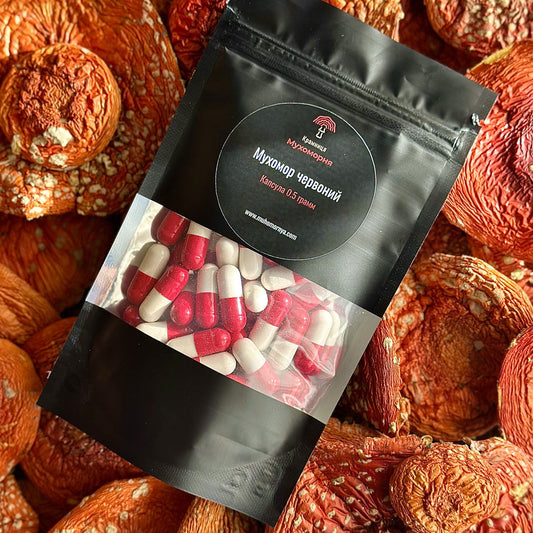
Instructions for using red amanita
Completing the microdosing course is not a difficult task. The main thing is to follow the recommendations on the use of red amanita in a disciplined manner and to pay...
Instructions for using red amanita
Completing the microdosing course is not a difficult task. The main thing is to follow the recommendations on the use of red amanita in a disciplined manner and to pay...
-
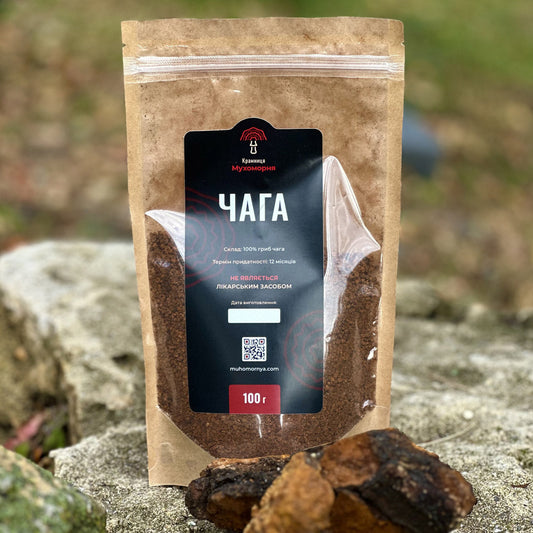
Instructions for using Chaga mushroom
What is this Chaga mushroom? Chaga, or chaga, is one of the best known and most useful tree parasitic mushrooms. It may seem that you have often encountered it in...
Instructions for using Chaga mushroom
What is this Chaga mushroom? Chaga, or chaga, is one of the best known and most useful tree parasitic mushrooms. It may seem that you have often encountered it in...
-
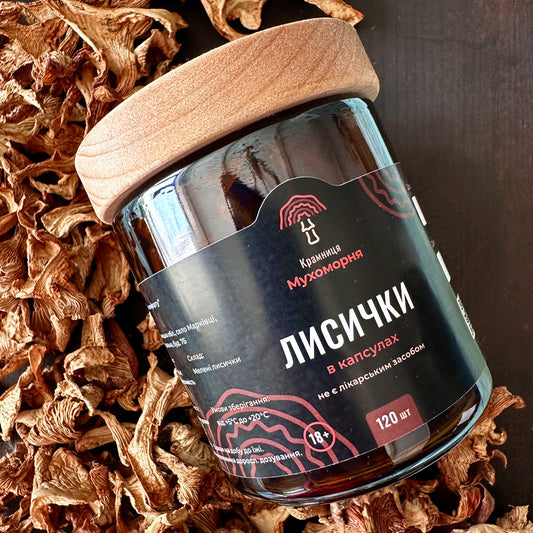
Instructions for using chanterelle mushrooms
What are chanterelle mushrooms? The real fox (yellow) is known to everyone who likes to go on a quiet hunt. This is an edible mushroom with excellent taste and pleasant...
Instructions for using chanterelle mushrooms
What are chanterelle mushrooms? The real fox (yellow) is known to everyone who likes to go on a quiet hunt. This is an edible mushroom with excellent taste and pleasant...
